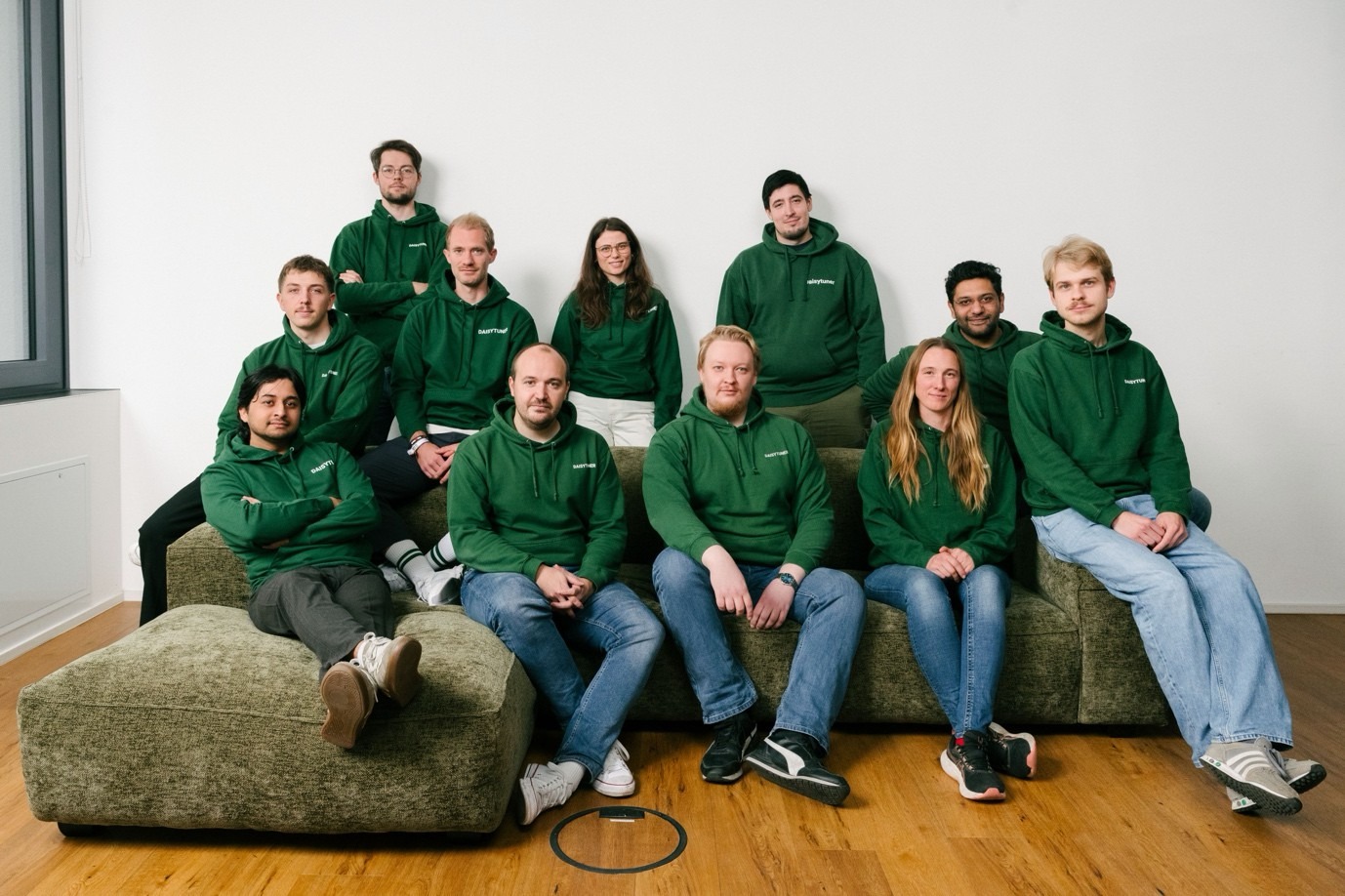
Darmstadt, Germany – German deep tech startup Daisytuner today announced €6 million in seed funding, co-led by Elaia and LEA Ventures with participation from Amadeus APEX Technology Fund and Seedcamp. Daisytuner will use the funding to bring Daisyflow to more enterprises, grow its team and expand its compiler technology.
Daisytuner automates performance engineering, the specialized work of tuning AI models to the chips they run on. By pairing a self-learning compiler with its patented optimization platform, Daisytuner aims to make every model run at top speed on any chip, so new models and new hardware no longer wait on manual integration. Its platform, Daisyflow, is now live in production. First results show Qwen 2.5 running up to 18% faster than industry standard vLLM on AMD Instinct GPUs.
AI’s new bottleneck: tuning models to chips
Open-weight models are now strong enough for companies to run state-of-the-art AI on their own hardware. As AI agents multiply the compute each task requires, what decides the cost and speed of AI is no longer the model but how well it runs on the chip underneath.
Hardware is also diversifying. Alongside generations of established GPUs, a growing range of new chips is coming to market, each with its own optimization needs. Yet performance engineering is still largely manual work, concentrated in a handful of frontier labs and focused on the latest hardware generation. Every new model or chip can break yesterday’s optimizations. As a result, most hardware runs well below its potential, and the software that unlocks it decides which chips companies can realistically use.
“Demand for AI compute is growing faster than any one chip generation can serve. The hardware to meet it is already out there, from established GPUs to a wave of new accelerators, but software keeps much of it on the sidelines. We’re working with chip vendors, European hyperscalers and enterprises to change that, so every chip runs at full speed and new ones go into production the moment they arrive.” says Lukas Trümper, CEO and co-founder of Daisytuner.
Unlocking every chip
Daisytuner replaces that manual work with an automated, self-improving process. Daisytuner’s open-source compiler turns code from frameworks such as PyTorch into native code for each chip, from Nvidia and AMD GPUs to next-generation architectures. AI agents test optimizations on real hardware around the clock, and the compiler verifies each one is correct before it is used. Every verified optimization is stored in a performance database and reused on similar code, so each new workload makes the next one faster.
Daisyflow brings this into production inside the customer’s own infrastructure. Built on open frameworks, it serves language, vision, speech and recommendation models with the APIs teams already use. New models and chips reach production without waiting on manual tuning, and companies can put their hardware to work from day one, with full control over cost and data, without having to build up engineering teams upfront.
Founded in 2024 by Lukas Trümper and Adrian Schmitz, Daisytuner is built on over a decade of research with a team from leading research labs such as ETH Zurich, TU Munich, RWTH Aachen, TU Darmstadt and Lawrence Livermore National Laboratory.
“Compute is the scarcest resource in AI, and most of it currently sits behind a single vendor’s software stack. Daisytuner lets the same code run at full performance on the silicon you choose, without a rewrite. Removing this bottleneck is what the whole industry needs. Lukas and Adrian have built world-class compiler technology from cutting-edge research and we’re proud to back them” says Sébastien Lefebvre, Partner at Elaia.
“Compute efficiency and technology sovereignty are the pressing problems in AI. Daisytuner puts control over both back in the hands of customers, who can finally demand more from their hardware” says Alexi Malikotsinas, General Partner at LEA Ventures.