

The title of this month’s newsletter is not alluding to the rogue OpenAI agent that quite literally left the chat on a hacking spree. While that is a worrying prospect, most people’s experience of AI and access to it usually extends to an empty chat box and not much else.
You ask a question, generate an image or video, maybe even write some code. The answer pops up on the screen, and for the past few years that digital realm has been where much of our imagination about what AI can be used for, ends.
What if the output was physical? Agents with a propensity to hack aside, I mean.
Earlier this month, researchers at the Innovative Genomics Institute used AI to help design new gene-editing enzymes beyond those found in nature. These designs were tested in bacteria, plants, and human cells. Some worked as well as, or better than, the natural enzyme they started with.
What we’re seeing is the promise of AI for science come to fruition, although it’s not actually as neat and tidy as that phrase might suggest. The use of AI is helping researchers parse mountains of data on possible materials, proteins, and medicines faster than ever before. It cuts out dead ends and helps scientists focus on the candidates most likely to work.
What it doesn’t cut out is the experiments needed to prove these findings.
Every promising result creates another thing that needs to be made and tested. As the number of potential candidates grows, the bottleneck may simply move from finding good ideas to testing them. This is a good problem to have, but a problem, nonetheless.
The companies that capitalise on that problem by creating a loop that feeds the experimental data back into the model, improving the next suggestions, are already ahead. Over time, these companies are building a body of experimental data and practical knowledge that can’t be copied as easily as a software feature or interface.
We see this happening across our portfolio.
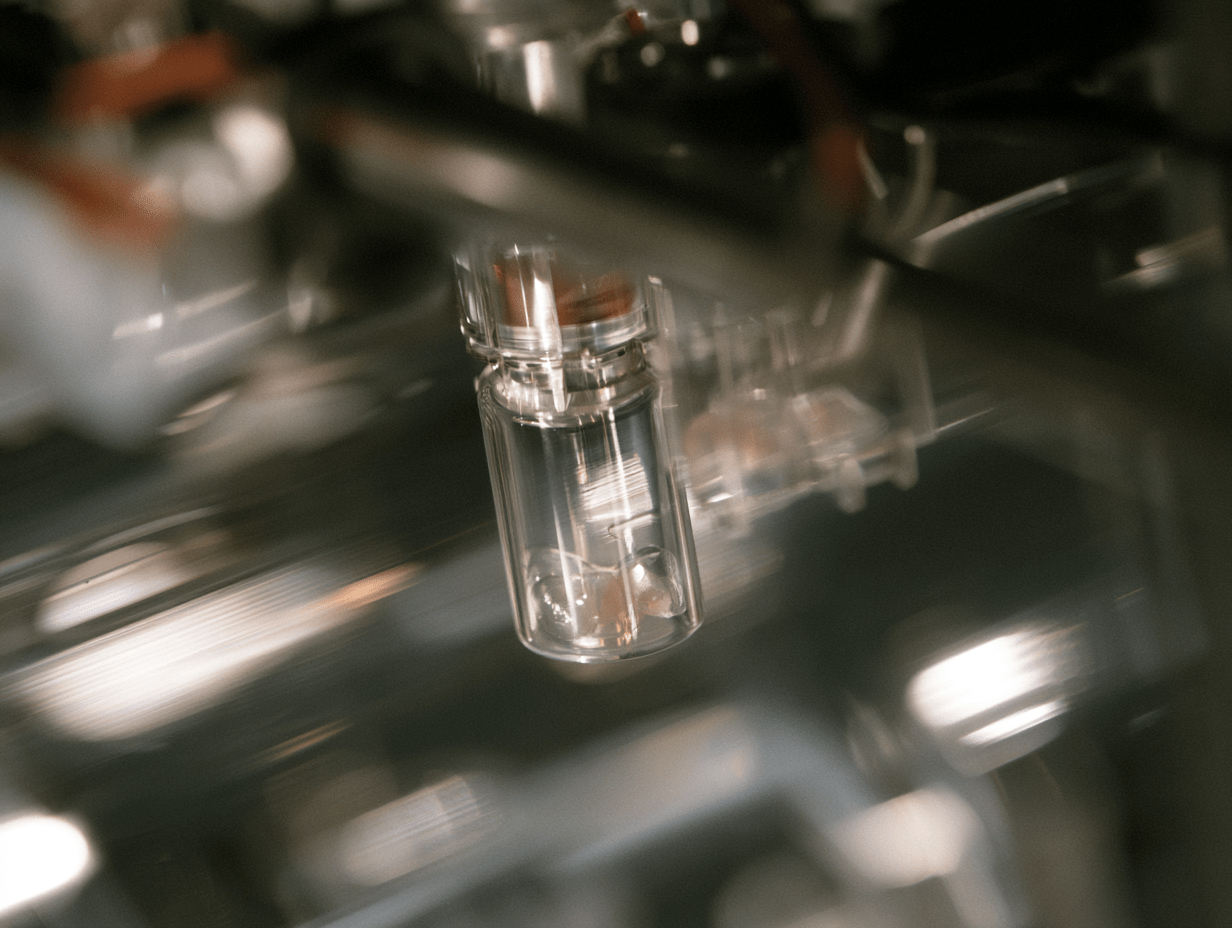
Constructive Bio isn’t only rewriting genetic code to create proteins with chemistries that don’t exist in nature. It’s also building the systems needed to manufacture them. Nuclera helps researchers move AI-generated proteins and antibody candidates from a digital design to experimental data. Essential for AI drug discovery.
Yes, AI is leaving the chat, but we still need companies that can translate ideas into real-world data, and the ability to manufacture them.
Read on for more news from our portfolio and partners across Intelligence, Human, and Planet this month.

Intelligence
Riverlane opens QEC development to the community. Riverlane and Unitary Foundation launched the Deltakit Community Fund to support developers building production-grade features for Riverlane’s open-source quantum error-correction toolkit.
Quantum meets industrial design. Quantinuum, Rolls-Royce, Riverlane and EPCC are teaming up to explore how quantum computing could support demanding industrial workflows, including gas-turbine design.
UnlikelyAI wins national recognition. UnlikelyAI won AI Innovation of the Year at The National AI Awards 2026, while founder and CEO William Tunstall-Pedoe FREng was named Alan Turing Innovator of the Year.
V7 connects AI workflows to investment teams. V7 and Bipsync partnered to connect V7 Go’s document workflows directly into Bipsync’s system of record, turning unstructured deal materials into structured fund records, research notes and IC memos.
Due diligence from weeks to a day. V7’s Moderne Ventures case study shows how V7 Go can turn data rooms into investment memos in the firm’s own template, with claims traced back to source.
Agent security recognition. Secure Agentics earned an Honorable Mention in Black Hat 2026’s Startup Spotlight for Adrian, its open-source runtime security toolkit for AI agents.
Commercial muscle for quantum scale. Photonic appointed former Microsoft Quantum leader Orlagh Neary as Chief Marketing Officer and Briony Shipman as VP, Global Government Affairs, strengthening the team as it moves from technology building to market building.
Voice at the edge. XMOS launched VocalFusion XVF3620, adding AI noise reduction, echo cancellation and beamforming for voice-enabled products operating in noisy, real-world environments.

Human
Healx enters the clinic. Healx dosed the first patient in a Phase 1/2 trial of HLX-4310 for relapsed and refractory sarcoma, with a focus on osteosarcoma.
Breast MRI, with AI support. Quibim launched QP-Breast in Europe and the UK, a CE and UKCA-marked tool designed to help radiologists detect suspected breast lesions on MRI.
Long-read sequencing moves deeper into clinical practice. Victorian Clinical Genetics Services received ISO 15189 accreditation for a clinical whole-genome sequencing workflow using Oxford Nanopore technology.
Engineering recognition for Oxford Nanopore. Oxford Nanopore won the 2026 MacRobert Award for its real-time DNA/RNA sequencing technology, recognised for technical, commercial and societal impact.
Breath-based lung diagnostics. Respiro Diagnostics raised £1m to advance a non-invasive liquid-biopsy platform analysing DNA, RNA and proteins from exhaled breath, with Amadeus participating in the round.
AI antibody design, faster feedback. Nuclera published a new piece on accelerating the design-build-test-learn cycle for AI-designed antibodies.

Planet
Agentic trade workflows. Altana acquired Cervo AI to create an end-to-end AI workflow for customs brokerage, from classifying goods to preparing submission-ready customs entries.
Graphene electronics scales up. Paragraf formed a new Advisory Committee with senior semiconductor industry figures, with two members also joining the board as Non-Executive Directors, as the company scales production and expands internationally.
News from the team
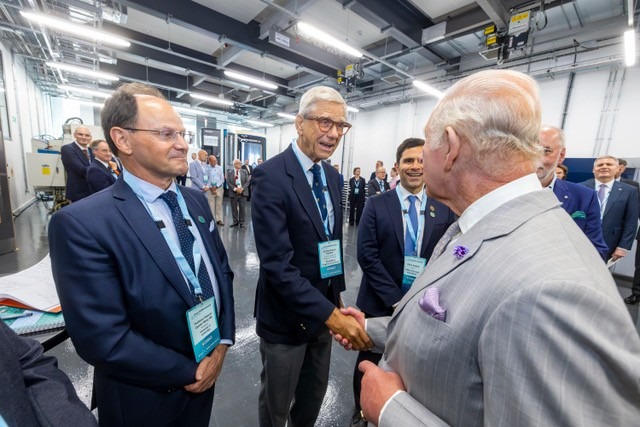
An audience with The King. Our co-founder and Venture Partner, Hermann, met His Majesty The King at the opening of Cambridge West’s new Whittle Laboratory.
DSIT is no more. Our co-founder and CEO, Anne, was quoted in Bloomberg on the UK’s position as a quantum computing cluster following the reshuffle of science and innovation technology responsibilities by the new UK Prime Minister.
Rome wasn’t built in a day. Neither are companies – and they’re rarely a solo act. Anne was interviewed and features in Yale Insights, looking back on nearly three decades of backing deep tech companies.
If you enjoyed reading this issue of Capitalise, why not subscribe below to receive it directly to your inbox.